
Investing
9-to-5 to Financial Freedom: ETF Shop Method

FabTrader
Article overview
For most of us who work a 9-to-5 job, active trading often feels out of reach. We don’t have hours to sit glued to a screen, nor do we want to carry the stress of managing dozens of open positions. What we really look for is something simple: a strategy that requires little effort, doesn’t take too much time, keeps...
For most of us who work a 9-to-5 job, active trading often feels out of reach. We don’t have hours to sit glued to a screen, nor do we want to carry the stress of managing dozens of open positions. What we really look for is something simple: a strategy that requires little effort, doesn’t take too much time, keeps risks under control, and still gives us a fair shot at building wealth.
That’s where strategies like ETF Shop come in — an approach that needs no more than 10 minutes a day, usually between 3:20 pm and 3:30 pm, right before the market closes.
Why ETFs?
Before diving into the strategy, let’s talk about the instrument itself. Exchange Traded Funds (ETFs) are essentially baskets of stocks bundled into a single tradable unit. Instead of putting all your money into one company (and bearing the risk of that company collapsing), ETFs spread your exposure across dozens, sometimes hundreds, of businesses.
That diversification makes ETFs inherently safer than investing in a single stock. It’s like not putting all your eggs in one basket. For a strategy like ETF Shop — which depends on buying near lows and averaging down — this safety net is critical.
Origins of the ETF Shop Strategy
This particular strategy was originally proposed by Mr. Mahesh Chander Kaushik, a well-known financial educator on YouTube. Over the years, he has shared simple, practical approaches to investing — aimed not at professional traders, but at everyday people looking to grow wealth steadily.
The Hypothesis
At its core, the hypothesis is simple:
- Stocks and ETFs that are hovering near their 52-week lows often represent undervalued opportunities.
- If you buy into them systematically, you can capture upside as they revert to more reasonable valuations.
- By averaging down on dips, you reduce the average entry price, improving the odds of hitting profit targets.
- By setting a strict exit target, you avoid the trap of waiting endlessly for higher returns.
This creates a disciplined, rule-based system that doesn’t rely on gut feelings or guesswork.
The Rules of ETF Shop
Here’s how the system works, step by step:
- Screening Candidates
- Every day, identify the top 10 ETFs closest to their 52-week low, sorted by proximity.
- Entry
- Starting from the top of the list, buy the first ETF that you don’t already hold.
- If all 10 are already in your holdings, switch to averaging mode.
- Averaging Down
- In averaging mode, look at your existing holdings.
- If any ETF has fallen more than 3.14% from your last buy price, pick the one that has dropped the most, and add to it.
- If none meet this condition, you simply skip the day.
- Exit
- Sell when the ETF’s price rises 3.14% or 4.71% or 6.28% (depending upon your risk or ability to hold positions longer) above your average buy price.
- Exits happen before new buys, so released capital can be reused.
- Money Management
- Each trade is capped at a fixed allocation (say ₹10,000), or dynamically divided based on portfolio size.
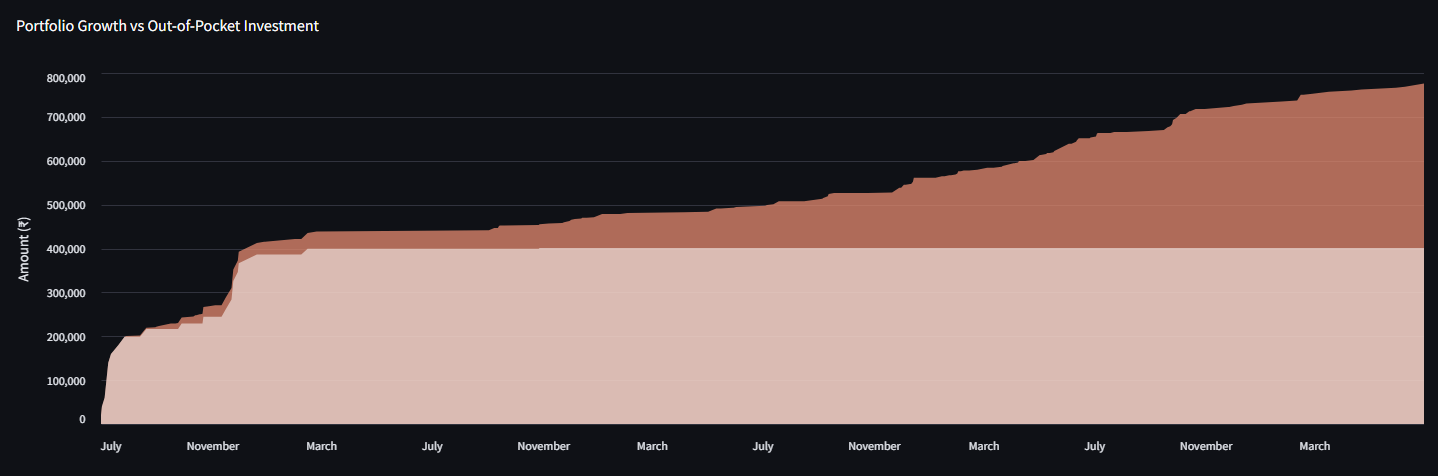
- The maximum investment cap is ₹400,000, ensuring no overexposure.
Why This Strategy Appeals
- Low Time Commitment: Just 10 minutes a day.
- Low Complexity: Clear, rule-based system.
- Low Stress: No need to monitor intraday charts or news.
- Controlled Risk: Diversified via ETFs and capped exposure.
- Systematic: Removes emotions from decisions.
Backtest Insights
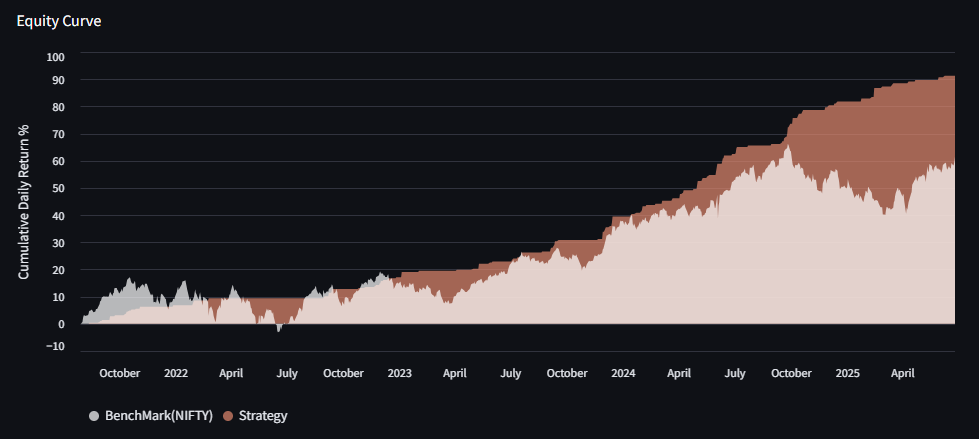
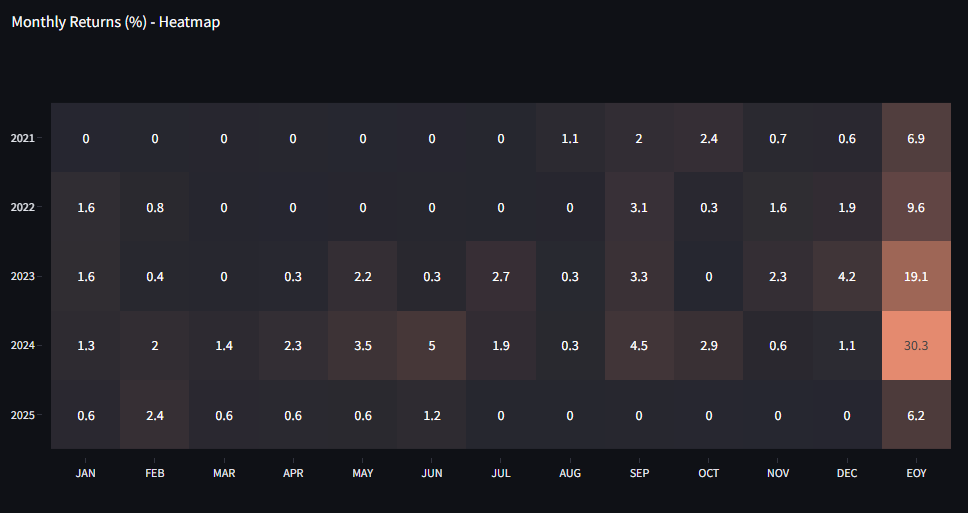
I’ve taken the time to build a proper Python backtester for this strategy. The results are eye-opening. Without revealing everything here (I’ll save the full backtest reports, trade logs, and screeners for my store), here are some key highlights:
- Consistent gains when applied over multiple years.
- Drawdowns are present but controlled, thanks to averaging down.
- Win rate and CAGR vary depending on allocation method (static vs dynamic).
Equity Curve
Monthly Returns Heatmap
Portfolio Growth
Where can you find more details about this strategy and Backtest?
If this strategy excites you, here are two ways you can take the next step:
- ETF Shop Package
- Complete backtest results including tradebooks of all scenarios tested
- Full Python code
- Ranking Sheet of all Scenarios/input combinations tested
👉 Available at my store
How I Backtested This
I have a full-fledged backtesting framework in Python, built to test trading strategies with precision.
More from Investing
Is the Stock Market Quietly Killing Human Creativity and productivity?
For centuries, human progress has been driven by people who built things—engineers, scientists, entrepreneurs, artists and inventors. But as financial markets become...
Beyond Returns: Why I Built a More Intelligent Midcap Mutual Fund Screener
Looking for the best midcap mutual funds in India? This article explains how our Midcap Mutual Fund Screener goes beyond traditional return-based...
How to Build a robust Passive Index Investing System that works
Passive investing has transformed the way investors build wealth. But with so many choices—from Nifty 50 Index Funds and Nifty Next 50...