
F.I.R.E
The FIRE Dream in India Is Changing — And Most People Haven’t Realised It

FabTrader
Article overview
India’s growth story looks stronger than ever on paper. But beneath the headlines, something important is changing for salaried professionals, investors, and FIRE aspirants across the country. The latest Economic Survey reveals deeper shifts around inflation, urban stress, global uncertainty, AI, and the future of wealth creation in India. In this article, we explore what these changes could mean for Financial Freedom, investing, and the way Indians may need to think about money in the decade ahead.
For the last decade, many Indians quietly believed in a simple formula for financial freedom.
Study hard. Build a stable career. Increase your income steadily. Invest consistently into mutual funds and equities. Maybe buy a house somewhere along the way. And eventually reach a point where work becomes optional.
The FIRE movement — Financial Independence, Retire Early — became popular because it transformed wealth creation from something vague into something measurable. For the first time, ordinary salaried professionals felt like financial freedom was not just reserved for business owners or ultra-rich families.
And honestly, for a while, the environment supported that dream beautifully.
Globalization was expanding rapidly. Technology jobs were booming. Salaries in urban India were rising meaningfully. Equity markets delivered extraordinary long-term returns. Interest rates stayed supportive for long periods, and digital investing made wealth creation accessible to almost everyone.
But while reading the latest Economic Survey by the Ministry of Finance, one thought kept returning to my mind:
What if the next decade looks fundamentally different from the previous one?
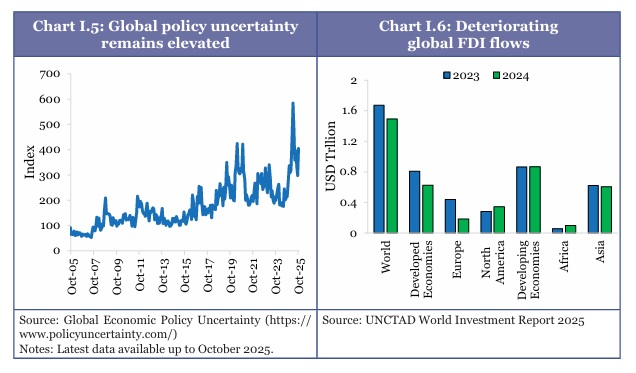
Because beneath the optimism around India’s growth story, the Survey quietly acknowledges something important — uncertainty itself may become permanent.
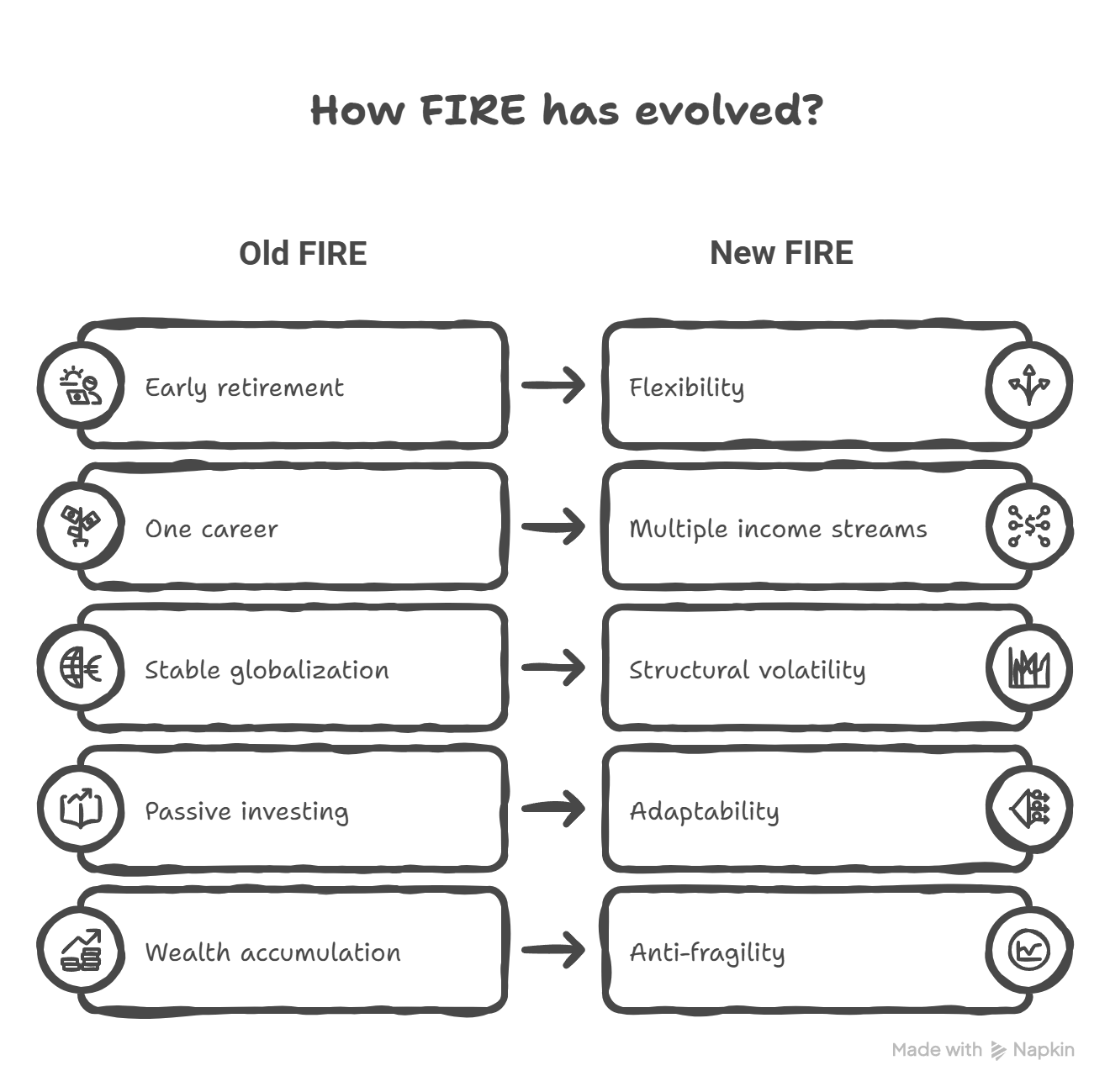
And if that is true, then the old FIRE playbook may no longer be enough.
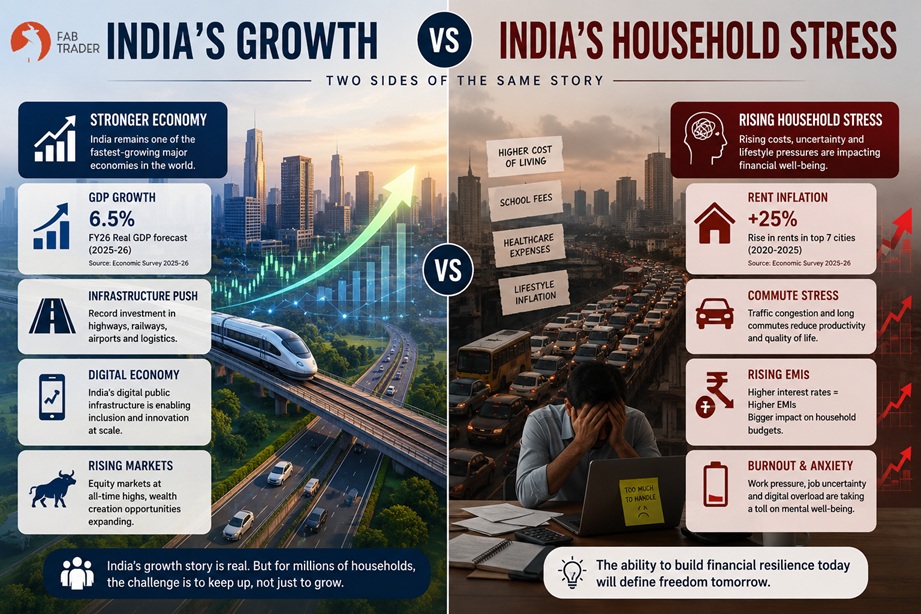
India Is Growing Fast. So Why Do People Feel Financially Stressed?
On paper, India looks incredibly strong right now.
The Economic Survey repeatedly highlights that India remains one of the fastest-growing major economies in the world despite geopolitical conflicts, supply-chain disruptions, inflation shocks, and tightening global financial conditions.
That resilience deserves appreciation. But step away from the macro numbers for a moment and talk to actual households in Bengaluru, Mumbai, Hyderabad, Pune or Gurgaon, and you notice something interesting.
Many people are earning significantly more than they did five years ago. Yet emotionally, they often feel financially less secure. That contradiction is the real story.
The problem is that modern financial stress is no longer driven only by low income. Increasingly, it is driven by fragility.
Rent inflation in major Indian cities has exploded. School fees continue to rise faster than headline inflation. Healthcare costs quietly compound every single year. Urban commuting consumes enormous amounts of time and mental energy. And now AI-driven disruption has introduced a new layer of anxiety even among highly skilled professionals.
The Economic Survey itself acknowledges rising urban pressures, congestion challenges, affordability concerns, and declining quality-of-life indicators in rapidly expanding cities.
India is growing rapidly. But many Indians increasingly feel like they are running faster simply to stay in the same place.
The Old FIRE Formula Was Built for a Different World
The original FIRE movement emerged during a very specific economic era. It was an era defined by:
- expanding globalization
- relatively stable geopolitics
- falling interest rates
- predictable inflation
- strong equity market returns
- rapidly growing white-collar industries
The formula was simple: save aggressively, invest consistently, and let compounding do the heavy lifting. And to be fair, it worked extremely well for many people.
But the Economic Survey repeatedly hints that the next decade may not offer the same conditions. One line from the Survey stood out deeply to me. It described India’s challenge as:
“Running a marathon while sprinting”
That might be one of the most accurate descriptions of modern economic life in India today. We are trying to build long-term financial stability while constantly reacting to short-term shocks.
A war somewhere affects oil prices. Oil prices affect inflation. Inflation affects interest rates. Interest rates affect EMIs, startup funding, hiring cycles, market valuations and household cash flows.
One geopolitical event thousands of kilometers away now directly affects the monthly SIP of an Indian middle-class family. That interconnectedness changes the nature of financial planning itself.
Financial Freedom Is No Longer Just About Wealth. It Is About Resilience
For years, wealth creation conversations focused heavily on maximizing returns.But the next decade may reward something else even more: resilience.
The people who thrive may not necessarily be the ones with the highest salaries or the most aggressive portfolios. They may simply be the people who can adapt faster.
People who:
- continuously learn new skills
- build multiple income streams
- avoid lifestyle traps
- maintain low fixed expenses
- preserve flexibility
- stay employable across changing economic cycles
In short, the future may belong to anti-fragile people.
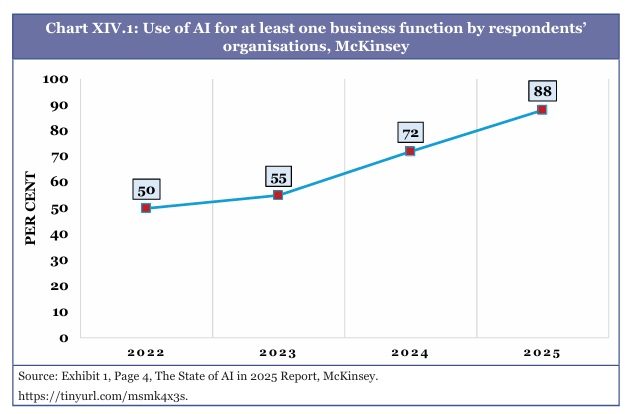
This idea becomes even more important when the Survey discusses artificial intelligence and changing labour markets. Interestingly, the Survey takes a far more nuanced position on AI than most mainstream headlines.
Instead of simply predicting job destruction, it emphasizes the growing importance of human-centric capabilities such as adaptability, communication, practical execution, judgment and experiential learning.
That is a profound shift. For years, many white-collar professionals assumed knowledge work itself was inherently safe. But AI is beginning to commoditize certain forms of knowledge far faster than expected.
Which means future economic value may increasingly come from qualities that are difficult to automate:
- trust
- creativity
- communication
- emotional intelligence
- decision-making
- adaptability
That has massive implications for young Indians planning their careers today.
The Biggest Hidden Risk: Lifestyle Lock-In
One of the biggest hidden threats to Financial Freedom in modern India is not inflation alone.
It is lifestyle lock-in
As incomes rise, urban professionals unconsciously build lives that require extremely high monthly cash flow to sustain. Bigger homes, expensive rent locations, premium schooling, car loans, subscriptions, dining culture and lifestyle inflation gradually become normalized.
Individually, none of these decisions seem reckless. But collectively, they create fragile financial structures. And fragility becomes dangerous in uncertain environments.
A person earning ₹40 lakh annually but locked into massive fixed obligations may actually be more vulnerable than someone earning half as much with low fixed expenses and high flexibility.
That is an uncomfortable truth most people avoid discussing. The Economic Survey repeatedly discusses structural uncertainty across the global economy. But household fragility matters just as much. Because resilience is not only about portfolio returns. It is also about having room to breathe.
Why Optionality May Become the Most Valuable Asset
For decades, career planning in India followed a predictable linear path: education, job, promotions, salary hikes, retirement. But linear careers themselves may become increasingly rare.
The Economic Survey repeatedly discusses technological transformation, industrial realignments and productivity shifts across sectors. In such a world, optionality becomes an underrated financial asset.
Optionality means:
- having enough savings to walk away from toxic work
- developing transferable skills
- building side income streams
- avoiding excessive fixed obligations
- having the flexibility to pivot careers if needed
Ironically, this brings us back to the original spirit of FIRE. Because the deepest purpose of Financial Freedom was never really about retiring early. It was about reducing dependency.
It was about reclaiming control over your time, decisions and peace of mind. And perhaps that idea is more relevant today than ever before.
The Future May Reward Resilience More Than Aggression
None of this means India’s future is pessimistic.In fact, the Economic Survey remains deeply optimistic about India’s long-term growth potential. India still possesses enormous demographic advantages, entrepreneurial energy, digital infrastructure capabilities and manufacturing ambitions.
The opportunity ahead remains massive. But the nature of wealth creation may change significantly.
The coming decade may reward:
- patience over hype
- resilience over aggression
- flexibility over rigid planning
- sustainable cash flow over appearances
- adaptability over specialization
Maybe Financial Freedom in India will no longer mean retiring at 40 and never working again. Maybe it will simply mean having enough flexibility to live life on your own terms without constant financial anxiety.
And honestly, that feels like a far more durable definition of wealth for the world we are entering.
Final Thought
The Economic Survey gives us an important reminder. The future will probably not be smooth, linear or predictable. But India’s greatest advantage has always been adaptability.
The people who succeed in the coming decade may not necessarily be the highest earners or the most aggressive investors.
They may simply be the people who build lives capable of surviving uncertainty without losing peace of mind.
And perhaps that is what true Financial Freedom was supposed to mean all along.
More from F.I.R.E
Goodbye, Bucket Strategy: How I built my Own Retirement OS
As I get closer to early retirement, I've realized that building a retirement corpus is only half the journey. The bigger challenge...
Financial Freedom: From One Rat Race to Another
Many people discover the FIRE (Financial Independence, Retire Early) movement hoping to escape the corporate rat race, only to find themselves trapped...
The Difference Between Being Financially Free and Financially Loud
The other day, I watched a YouTube video that left me unsettled in a way I didn’t expect.